Week in Review: 22-29 December 2021

It’s a little funny to be starting this “week in review” series up again at the end of the year like this. But, start as you mean to continue, right? Also, the depressive haze of “nowhere to go, no one to see, nothing to do” of quarantine and the slow apocalypse has decided to lift somewhat as of late, and my reading has increased in response.

Read:

  • “Compulsory Games” by Robert Aickman
  • “The Mask” by Robert W. Chambers
  • “In the Court of the Dragon” also by Chambers
  • Things have gotten worse since we last spoke by Eric LaRocca
  • Some amount of Love, Activism, and the Respectable Life of Alice Dunbar-Nelson by Tara T. Green
  • Dangerous Dimensions

Watched:

  • The Witcher Season 2 (partial)
  • Some episodes of Star Trek: The Next Generation (Season 2)

There was also Christmas and family events and all that, so it’s been a busy week.

Aickman (musings)

Aickman in particular has made a very strong impression on me. I started with his story “Hand in Glove” (all of my reading of Aickman comes from the NYRB collection of his works Compulsory Games edited and introduced by Victoria Nelson). My initial response to that story was, ‘This is too English for me to really understand it.’ Which might seem silly, but there have been times where that particular flavor of English reticence and ingrained class conscious conflict (among other cultural factors) has utterly baffled and alienated me.

My second go-round with Aickman, which I was considering after I wrapped up “Dangerous Dimensions” and had to (sullenly and with much grumbling) reassess my view of Algernon Blackwood (I wasn’t a fan of “The Willows” — the vacillation between unhinged hysteria and obviously doomed attempts to rationalize the supernatural was exhausting and somewhat irritating), I felt it was only just to give Aickman another shot.

I finished the story “Compulsory Games” which I had already begun the previous time I had picked up the book. And after finishing it, no more certain of what I had just experienced that I was at the end of “Hand in Glove”, I turned to Nelson’s introduction to the volume of Aickman’s fiction. While I disagree with some of her points about “the horror genre” as a comprehensive whole (Of black humor she says, “Like sex, this element, and its prerequisite of a sophisticated sensibility, is usually absent in the horror genre.” (p. xii) I also feel that her view that sex is necessarily or usually absent from horror fiction holds true only in certain eras of the genre. But my rapturous and irrepressible rhapsodizing about Livia Llewelyn will have to wait for another day.)

Most importantly, Nelson helpfully contextualizes Aickman’s fiction as being not necessarily “supernatural” so much as “unnatural.” (p. viii) And indeed, thus far it seems best to approach Aickman with the tacit recognition that no explanation is forthcoming, and that any attempts to classify or qualify the experience of his characters according to known modes will result in abject failure. Here, again, Nelson fails to distinguish between the “neatly wrapped up” ending of the traditional ghost story or gothic model of the tale, where the supernatural elements are controlled, contained, and neutralized within the narrative, and the often more ambiguous, unresolved “explanations” of authors generally associated with the Weird.

Indeed, by this measure of irreducible weirdness Aickman can, without a doubt, be counted among the writers of the weird. However, I believe his fiction may leave some readers wanting for something a bit more coherent than what is actually on offer within his stories. He, for the most part, avoids the irritating sensation that he, the author, is as ignorant of understanding as the reader. But nor does he convey the absolute confidence of some other writers (Laird Barron comes to mind, and even Michael Cisco) that he is in full command of his concocted un-reality, and merely choosing to omit an easy answer for the benefit (or frustration) of the reader.

All this to say, more to follow on Aickman soon. I have 13 more stories to go in this volume.

Dangerous Dimensions (1st and 2nd Impressions)

When ordering books for the store, my boss read the title of this book and said, ‘Hey this is the book for you!’

Indeed, I keep threatening that once I get my act together I’ll figure out how to design a t-shirt graphic that conveys “spooky polyhedra” à la “Dreams in the Witch-House.” I love the somewhat ridiculous – though often extremely effective – notion of maddening and mind-bending mathematics. Who needs monsters when you can have equations that rend the very fabric of the known universe?

Unfortunately, Dangerous Dimensions takes us back to the early applications of the discovery of a “Fourth Dimension” (other than time), starting with H.G. Wells’ “Title”. I found this one almost unbearable. Here the fourth dimension becomes a kind of pseudo-scientific purgatory, where the souls of the dead spectate the lives of the still-living. There wasn’t anything particularly wrong with the story, but it really got into a particular kind of religious- or piously inflected supernatural horror which has never ‘done it’ for me.

The other notable stinker in the collection for me was “Space” by John Buchan. In a sense the introduction to Buchan and his story were of greater issue than the story itself. This volume contains one of the Lovecraft collaborations, and almost the entire introduction to the story/authors for that entry is given over to superficial discussion of Lovecraft’s racism, to the point where I learned nothing about Henry S. Whitehead. Now, “Space” is a story whose entire set-up relies heavily on the notion that Europeans are a more “evolved” form of man and have lost the senses unique to animals and “Savages” which allow them to distinguish the fourth dimension of ‘space’.

I’m not here to rampage against the impolitic and backwards “scientific views” portrayed in the story, but I do take issue with the notion that Lovecraft has become the popular repository for all discussion about racism and eugenic description in genre literature of a particular era. Race featured in a negligible capacity in the Whitehead & Lovecraft story (the 16th century evil Austrian magician or whatever he was had two Black slaves, which is unpleasant and perhaps upsetting but does not really conform with the more egregious elements of Lovecraft’s unpalatable social and scientific views on race). Meanwhile, “Space” displays the very form of ‘eugenic epistemology’ which so tarnishes Lovecraft’s work, and not a single mention of the evolutionary rhetoric is included in the introduction to the story itself.

That is to say: string them all up.

The story itself was fine, but the discussion of the “aboriginal savage” which dominates the beginning of the story definitely left me feeling the strain of having to look past the less than savory socio-political-epistemological aspects.

The stand-out winners in the collection were, for me, Donald Wandrei’s “Infinity Zero” and the Robert Heinlein story “…and he built a crooked house…”. The former has inspired me through its vivid imagery to finally attempt a suitably ‘mathematic’ Weird illustration, as well as being genuinely freaky. The science is also quite good.

Meanwhile, the latter – the Heinlein – was so funny that I’m perplexed no one has adapted it to cinema as of yet. It would make for a very fun, and very funny, little film. Strong visuals, and a lighthearted and enjoyable tone. Some minor “updating” might be required to render the female character a little more palatable for a contemporary audience, but I’m sure there are people who would utterly fail to recognize the light misogyny which persists within the characterizations.

On the whole, it was a solid collection. I felt that the editor tipped his hand a bit including two Blackwood stories (a personal favorite and academic interest of the editor) but I must admit that both Blackwood stories were pretty good. Enough that I’m seriously considering searching up more of the John Silence stories for future reading.

Quick Notes on Things Have Gotten Worse Since We Last Spoke

I have plenty to say about Eric LaRocca’s Things have gotten worse… Though not perhaps as many to say as the run-away hit of the season merits. The big one is that while I expected it to go one way (and then after the first twist another way, and then yet another way after the second twist) it never really went where you expected it to go. This means that though the experience is deeply horrifying and made my skin hurt, it was never banal.

I must admit that I’m not sure the book ever really tips over into the realm of “erotic horror” but the bar/standard I have for that was set by Livia Llewelyn (specifically the collection Furnace), then solidified with Steven Berman’s Fit for Consumption, with an honorable mention for That One Story in Bracken MacLeod’s 13 Views from the Suicide Woods. Which is to say, an epistolary narrative is unlikely to meet the necessary qualifications of embodiment to really make the “erotic horror” grade. This is in no way a criticism of the book itself, but rather the way the presentation implies a particular tone or expectation which is not quite fulfilled.

Mr. LaRocca certainly has my attention. My tastes run toward the more supernatural than the mundane in the annals of horror and weird fiction, but LaRocca’s characters are so vividly painted and pleasingly complete (if utterly unhinged) that I would be willing to venture into the depths of the believably horrible with his prose charting the path.


That’s certainly MORE than enough words on any number of topics. And I’ll be back with some slightly more fleshed out reviews as well as a few musings like “What exactly is appetite in horror?” (Brought to you by Fit for Consumption where food and sex make for natural if discomfiting bedfellows.) Formal reviews for the above mentioned collections should be forthcoming, and something a little meatier for Mr. LaRocca’s work as well, when I finish digesting it. (I only finished the book two nights ago.) As well as hopefully something on Jeffery Ford’s Big Dark Hole collection, which I am part-way through.

Dreaming of all the endings

I used to wake up in a blind panic in the middle of the night, nerves alight with the horror not of dying but of watching the rest of the world die, and be swept away by forces too strong and too organic, too natural, to ever withstand.

When I was 13, they showed the movie Slither at the 24 Hour Boston Science Fiction film marathon. I didn’t want to watch it, all too aware of my fragile psycho-emotional capacity, but my friends, being boys of a certain age, knew that watching me scream and flinch would only make the experience that much better for them. I can still remember the way the movie was supposed to be funny, but even now, with the hindsight of a decade and a half of experience and a hard won love of horror movies, those moments are still burned into my brain with revulsion and abject, animal fear.

The next year, I went with friends to see Cloverfield, another film I knew I would regret, but I was unwilling to be left out of the social experience of going to see the big sci-fi flick of the summer, the R-rated horror movie everyone was talking about. The jokes are funnier this time around, but everyone told me that I looked like the friend with the curly hair who exits the narrative by exploding in silhouette behind a tarp in a flurry of screaming and pushy army National guardsmen.

The nightmares woke me up and kept me from sleeping. I would lie, paralyzed in the dark, my heart pounding, sweating, terrified, occasionally creeping across the hall to listen at my parents’ door to their snoring, the reminder that no one had yet died, and that my loneliness was an inevitability from which I was separated by time, the clutch of terror being that of not knowing what time that would be.

This was when I started sleeping with the lights on.

For many years I slept in a tent in my bedroom, futon on the floor, while the floor lamp illuminated the space around it, a desperate attempt to the keep the nightmares and the panic attacks at bay.

My sleep was disordered, from ADHD (undiagnosed and untreated) and depression (untreated) and anxiety (undiagnosed and untreated), but sleeping with the lights off became a priority. It couldn’t be good for my circadian rhythm. Staying up all night on the computer couldn’t be good for my circadian rhythm, no matter how good insomnia and the internet are for keeping the nightmares at bay.

These are the years where I dream of barricading myself on the top floor of our house while the ravenous living dead shuffle and groan their way through my neighborhood. No matter how successful my planning is within these dreams, I know that nothing can save me. Survival is not contingent, because death is (and always has been) inevitable. Once my mother and my father and my friends and neighbors have been overtaken by this calamity, there is nothing left except the breath in my lungs, the blood in my veins, and the brains in my head, and I’m not sure I’ll still want them.

This is when I try to tell myself that bodies which no longer have hearts that beat or neurons that fire will inevitably succumb to rigor Morris, and in time to the natural process of decay. 28 Days Later ruins any hopes we have that this threat comes from the supernatural logics which govern the undead and can safely be overcome by healthy skepticism and adequate information regarding the death and decomposition process.

This is when I tell myself that I am already undead. When I was 4 months old, I went in for open heart surgery to fix my total anomalous pulmonary venus return, a birth defect where the cardiac plumbing is incorrectly hooked up, and so oxygenated blood returns directly to the heart and then to the lungs, without passing to the rest of the body. The defect had gone unnoticed because I had been born with another, fairly common, heart defect, which amounts to a hole between the chambers of the heart. That hole had been allowing blood to get to the rest of my body, but as I grew, the hole started to heal and close (a natural process which would have made the whole thing a non-issue in a properly put together infant). This caused the blood flow to the rest of my body to become interrupted.

To perform this open heart surgery, they had to lower my body temperature into the safe zone where decay and decomposition won’t set in and stop my heart while they made the adjustments which would allow the organ to properly pump blood throughout my body.

My heart had stopped, my body had been rendered “dead” for some in- or significant amount of time. By this logic, in some metaphysical sense, I was not just a living body, but a body rendered living and alive through unnatural means, a zombie, a walking corpse.

To be clear, I didn’t believe myself to be, actually, literally, dead. There were moments where I wished for Cotard’s Syndrome, imagined that delusion would save me from my existential dread. No, I was well aware that I was bargaining with the universe on technicalities, well aware that there was no Devil, no Satan for me to go against wit-for-wit like some kind of sniveling Daniel Webster.

But trying to plug the broken airlock of terror when we look into the abyss with the pathetic tissue paper of logic has never worked well for anyone, and I am no exception.

Maybe this was when I dreamed the dream where rather than fighting to live as I once had, I dreamt myself given over to the mercy of un-death, a new phantasmagoria where the parents of my childhood friends became herders of elephantine domesticated human livestock. This dream, when I described it to a friend of mine, made him agree that perhaps I should stay away from psychedelic or other psychoactive substances. By this time I had learned that the beauty of nightmares is that we wake up from them.

Ecological cataclysm and the crushing weight of capitalism have both driven me to the edge (and then, ultimately, over) of nervous breakdown. There were weeks in my freshman year of college where I couldn’t stand to participate in conversations about the weather because heart pounding, sweaty panic that would descend over my consciousness when I thought about our sudden and overwhelming snowfall or unseasonably balmy afternoons.

Chicken wings and, later, classes on the industry of meat production and the eco hazard of corn and soy monocultures and the yoking of farmers to poverty through genetic intellectual property made it impossible for me to eat first meat, and then anything at all without the sick feeling of guilt taking us residence inside me with each bite.

I used to worry about the end of the world.

And then it happened.

I tell the story with a laugh, but inside me something has yet to fully unclench from its position braced for impact.

“I used to have nightmares and lose sleep to panic attacks at the thought of a global pandemic,” I told my therapist and later my friends. “And now it’s happening. It’s so much more boring than I thought it would be.”

I always imagined the apocalypse would be a cataclysm. Too many years of atomic age science fiction, where the world ends in an instant.

I used to be afraid of the speed at which the world might change.

This year, I went from never having seen a corpse to having seen two. A mercy would be for Death to come unexpectedly, from behind. Not like the way night falls, slowly, by increments, an inevitability we must anticipate for hours or days, waiting for the moment when we can finally say, “That was the last bit of light,” as the darkness presses in from all sides.

“Do the Right Thing” **

I have struggled recently to take in and understand what is happening in the United States right now. Not because it seems out of line or out of nowhere, but because I’m on the other side of the Atlantic Ocean when my country is tearing itself apart in the quest for change and for justice and I have never felt so far away from the things and the people that matter, right now, to me.

I am very lucky that I do not have to explain why this outrage exists and why it is being expressed the way it is , for the most part, because I am in a country which has been through riots and through massive political upheaval only recently, and who look at the actions of the police in America and are horrified by what they see.

But I have been called on to try to explain how all this came about. The daily struggle for black people and black citizens in America to be seen and perceived as a worthy and respected membership in the American community has not been visible outside our borders to the extent which it is now. It has taken the near total collapse of the international political and economic infrastructure due to a global pandemic for America’s founding sin, which echoes throughout the present day and has done so without interruption since those earliest of days, to make headlines around the world.

That any number of people have thought to say to me, “We thought you’d moved past this,” was and is shocking to me. When my first thought when I heard that George Floyd said the words, “I can’t breathe,” was “Not again.” This wasn’t just the murder of another black man at the hands of police it was the reminder that since Eric Garner was murdered by police nothing has changed and those who claim to “protect and serve” felt comfortable repeating a murder in such a fashion that the victims must repeat their pleas for the most basic of mercies.

I don’t know, entirely, how to start this conversation over again from the beginning. Starting the marathon of rhetoric over again from the beginning, the same one we’ve been running at home for years and decades and centuries, sometimes threatens to take my feet out from under me.

Because this discussion is everything. This is about how we talk, and what we say, and what we mean; but it’s also about the structure of statistical information. It’s about the performance of identity and anger in public, and it’s about the confluence of structural inequalities.

This is a matter of life and death. This is a matter of honor and a moment of truth. We cannot look away and we cannot be silent.


** Spike Lee

A Geometry of Chaos

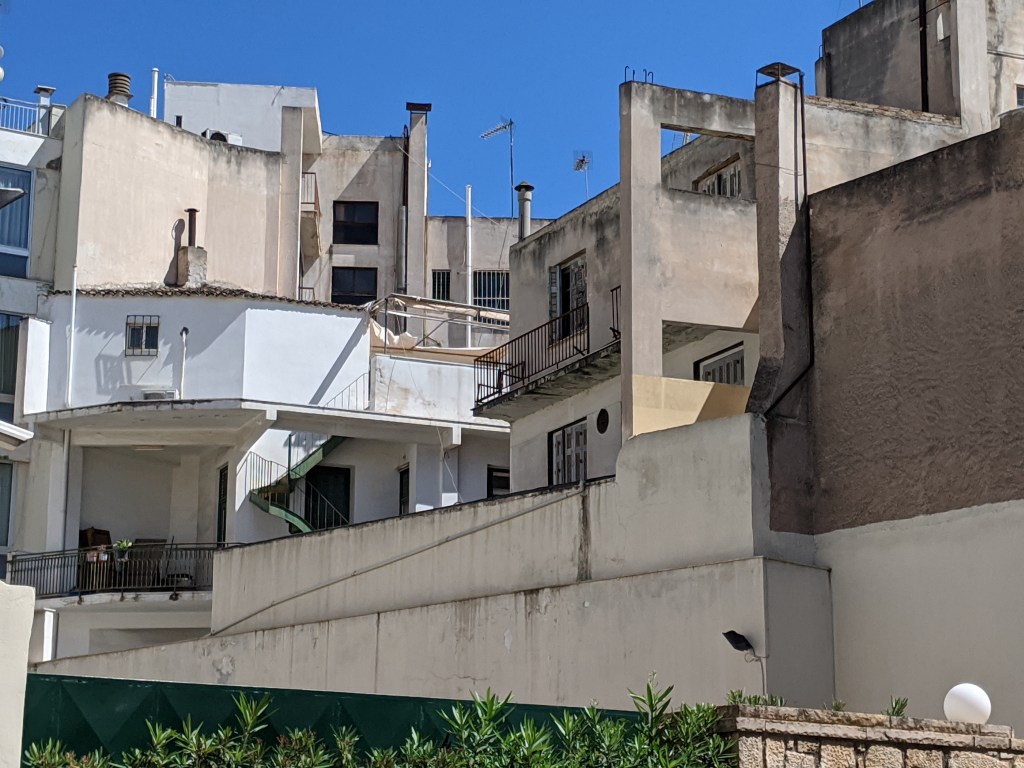
Athens is a funny place, architecturally speaking. In the U.S., the boom in funding of development projects, particularly in the area of public works, in the 1960s and 1970s in such places as Massachusetts, led to the blooming of Brutalist Modernism in government buildings and educational facilities (see: the University of Massachusetts, especially UMass Amherst and UMass Dartmouth).

Exposed, indecent concrete

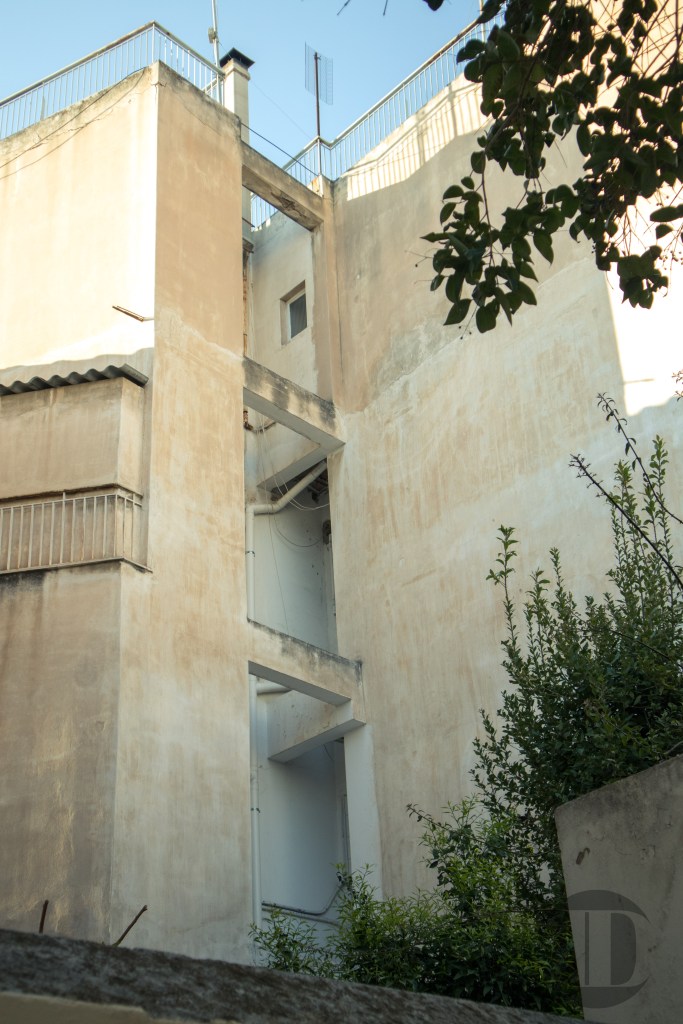
Athens had a similar boom in the 60s, but it didn’t result in the now-passé futurism of daringly uninterrupted planes of concrete (the béton brut, of Brutalism), it just resulted in empty spots of nothing where then-new multistory apartment buildings (πολυκατοικίες) randomly abut the empty air of empty lots and parking lots and the undeveloped airspace above older buildings.

Athens is a place of layered history, each year accumulates dirt and dust and the bottoms of the buildings become lower and lower, so that the late 19th century sits a little below the modern era, the Byzantine structures sit a foot or two below the current ground level, the classical period some five to ten feet below the surface. And looking upwards, the same thing is mirrored into space, with the buildings getting taller, and filling in what space they can, where physics and building permits allow.

A mess of planes and angles

It’s like the city got so excited about the opportunity to grow and develop that it overtook itself, tripping and flailing as it expanded. But the walls mirror the streets in meandering and intersecting one another until they give life to new, exciting shapes and experiences.

Having grown up familiar with the New England cities whose roads were laid down on cowpaths, summers in Athens still felt like home, with streets that run in parallel, except where they intersect. It’s got none of New York City’s careful, methodical approach to wayfinding and orientation.

When the opportunity arises to see Athens from above, such as from the Acropolis or some other height (after all, it has seven hills, as all proper cities should), little concrete blocks fill your vision in all directions like a rolling, constructed, pillared ocean, frozen for a split second in its heaving.

Rendering successful… Please enjoy Athens-2020.exp

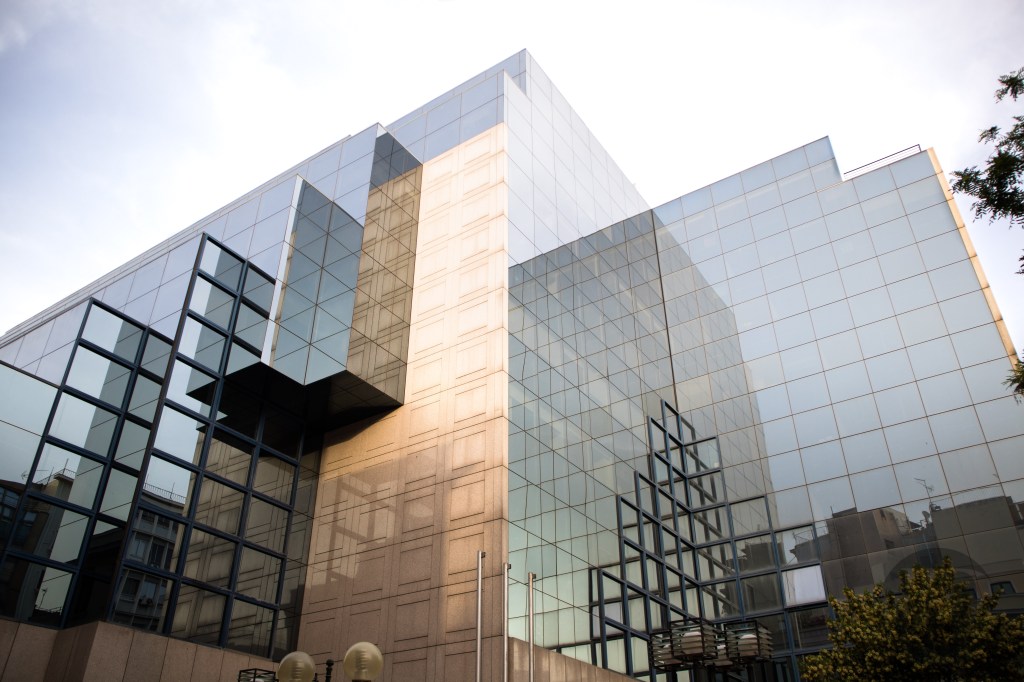
Now Athens is displaying more modern tendencies, able to reflect current trends in architecture, all glass and polished stone, reflecting itself and its surrounding back and back until passers by are dizzied by the sun hitting back into their eyes.

But even here, the overwhelming intersection of planes is retained, though more restrained and deliberate, the sudden shock of intersecting lines is still given life here.

Magical Thinking: The Hermit in quarantine

I’ve been discussing tarot interpretations with a friend who had decided to pull a card a day and then re-create it with items in her house during quarantine. The very first card she pulled was The Hermit.

“Just pulled a tarot card that hit a bit close to home,” she messaged me.

Indeed, pulling the Hermit as a card during forced isolation can feel a bit like the universe is laughing at you. Even those of us generally disinclined to go out and and live it up are chafing under the strict imposition of social distancing. It’s important, but not going outside was a lot more fun when it was a choice.

Yet, even enforced hermitage can learn something from IX of the Major Arcana. After all, the most pressing question the Hermit poses to us when we draw it is “Why are you pulling away from the world?” or “What do you hope to achieve with your isolation?”

The Hermit is a very spiritual card, not in the same way as the High Priestess or the Moon, but because it is a card which represents the work of spiritual practice. A traditional hermitage, the kind pursued by monks, saints, and other holy persons is a drawing away from the bustle of daily affairs and the material world in an attempt to access a higher, inner plane of being. Whether you are persuing mediation, prayer, or even the simple act of drawing a card once a day and carrying its meaning with you; the goal is to pull away from the riptide of quotidian tribulation to really assess oneself and ones place in the grand scheme of life.

Often, if the card appears reversed or negatively aspected within a spread, the Hermit can serve as a warning. We often tell ourselves when we pull away from those around us and the questions and concerns of the every day that we are doing it to achieve something elevated, but that is not always the case. Instead, it can be out of fear — that we will be hurt or overwhelmed — or laziness — a “spiritual” isolation is inviolable by sciences and philosophy with which we might disagree — or confusion — we don’t know when or how to make a decision so we decide to do or be nothing. These are not worthy reasons to pull away from the mass and hubub of life.

So, in one way, the Hermit can be a warning about examining carefully and honestly why we have pulled away from those around us. Are we genuinely pursuing something greater, or are we attempt to slip our duties to those around us.

In mandated isolation (and we are all isolated right now, whether we are required to go into work or not, the form and shape of life has been drastically and significantly altered for all of us), the Hermit is also a reminder of what we hope to gain when we choose isolation and contemplation instead of action. The work of self-knowledge, spiritual awakening, or intellectual elevation is not something we can achieve if we go into it with purely selfish intentions. The law of spiritual feeling is one of universal love, an expansion of the ego until it is ultimately destroyed and we are able to recognize a universal totality of which we are but a tiny, insignificant, shining piece.

Why should this particular aspect of the Hermit matter when we are all as close to locked away as we can get? Because it is the reminder that we are not doing this for ourselves or to be alone. We are doing it because we belong to a wider, greater whole. And while we are unable to be close to one another, unable to hold one another or sit together, we are not retreating from the world. We must find new ways of sharing of ourselves with one another, new ways of being and of supporting one another. We can still elevate ourselves and each other, without physically lifting one another (so to speak).

We have an opportunity for quiet, for contemplation, for self-examination, and self-improvement (and I don’t mean, necessarily, learning a new instrument or finishing your novel, or even getting through your back log of reading to catch up to where you have always imagined wanting to be; the barriers which have inhibited those actions are likely still present, be they work, time, or anxiety). So now it is up to us to recognize that this a moment where we can reckon with ourselves about what we cherish and what we need to feel our best selves.

When I left for Athens, I decided (for once in my life) to pack less than I expected to need. So my hermitage has become not only a test of moderate social isolation, but also one of asceticism. The question has very much become, can I stand living with two pairs of pants, six black t-shirts, and a week’s worth of underwear? How many pens and pads do really need? How many pairs of shoes do I need?

I’ve realized that I wish I had brought more of my make up with me, I miss having a second pair of shoes, and that not being near my personal library is utterly disorienting. Also I can apparently play Animal Crossing on the Nintendo Switch for about six hours every day, making it my primary activity (both leisure and otherwise). My natural circadian rhythm is 10 AM to 3 AM, and I really don’t like eating first thing when I wake up.

Some of these things I already knew, like the breakfast thing, but others have been surprising, like the make up. And the fact that I wish I had slightly more variety in the types of socks I had brought with me.

I haven’t been able to do too much reading, because the things which have been holding me back, most notably a particular intellectual restlessness, continue unabated (perhaps even exacerbated) in quaratine. But I have been able to write more, as this very blog post evidences, because I’ve managed to maintain my most productive social relationships (and even expanded them to include people I have been unable to see as much or as often as I might like) without having to submit to those interpersonal exchanges I find the most draining and least helpful.

In short, the Hermit is a reminder that we can learn much about ourselves and where we position ourselves in the world by cutting back or cutting away at those things which are a given in the normal course of life. We may not have chosen the social and physical distancing which we are now experiencing, but that does not mean we cannot find ways to make use of it, seek within and beyond ourselves that which will make the here and the now bearable.